
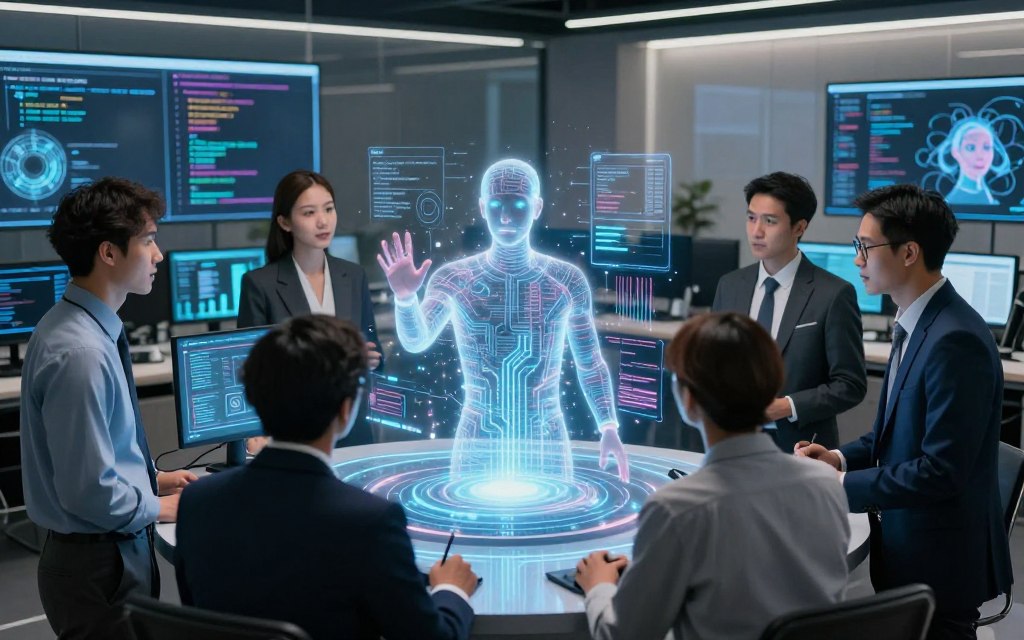
Many people ask, is artificial intelligence part of information technology? Yes, AI is a key part of today’s information technology ecosystem.
AI also connects closely with computer science, mathematics, and engineering.
Information technology uses technology to create, manage, secure, store, and deliver data. AI develops systems that perform tasks linked to human intelligence. These tasks include recognizing patterns, understanding language, making predictions, and supporting decisions.
This article explores the practical role of artificial intelligence in information technology. These areas include cloud platforms, enterprise software, cybersecurity systems, and data infrastructure. The relationship between AI and IT shows their overlap, but each serves a distinct purpose within the tech ecosystem.
Key Takeaways
- AI is a vital part of the information technology landscape.
- IT focuses on managing and delivering data effectively.
- AI systems perform tasks that mimic human intelligence.
- Understanding the relationship between AI and IT is crucial for tech professionals.
- AI operates in various domains, enhancing capabilities across platforms.
Defining Information Technology and Its Core Disciplines
Information Technology (IT) is a vital field that manages and processes information through many technologies and services. It supports modern organizations by guiding operations, communication, and decision-making. Learning the information technology definition helps explain its effect on business and society.
What Information Technology Encompasses
At its core, information technology uses computing systems, networks, software, databases, and devices. These tools create, process, store, protect, and exchange information across many activities. The field covers activities such as:
- Infrastructure management
- Systems administration
- Networking
- Software deployment
- Technical support
- Cybersecurity
- Database administration
- Cloud services
- Governance
Core Components of IT Systems
To support business operations, IT systems use several core components. These include:
- Servers: Centralized resources that manage network resources.
- Endpoints: Devices such as computers and smartphones used by end-users.
- Operating Systems: Software that manages hardware and software resources.
- Applications: Programs that perform specific tasks for users.
- Network Equipment: Devices that facilitate communication between computers.
- Identity Systems: Solutions that manage user identities and access.
- Data Storage: Solutions for storing and retrieving data efficiently.
- Monitoring Tools: Software that tracks system performance and security.
The Broad Scope of IT in Business Operations
In today’s digital landscape, businesses rely heavily on IT for many functions. These include:
- Communication
- Customer relationship management
- Financial operations
- Supply chain management
- Collaboration
- Compliance with regulations
- Data analytics
The broad reach of IT infrastructure includes tools such as artificial intelligence (AI), which improve information management and digital systems. As businesses evolve, integrating advanced tools into IT systems and business technology will continue to reshape operations and value delivery.
Related Posts:
- What Is Predictive Technology Forecasting Future Outcomes
- What Is Instructional Technology in the Classroom…

- What Does HCL Technologies Do Global IT Services Explained

- How Information Technology Has Changed the World A…

- What Does an IT Analyst Do Roles and…

- What Is Digital Technology in Media Transforming…

What Artificial Intelligence Means in the Modern Tech Landscape
Artificial Intelligence (AI) is changing modern technology. It means creating software and machines that perform tasks linked to human intelligence.
These tasks include learning from data, classifying information, interpreting speech, generating text or images, detecting anomalies, recommending actions, and making predictions. AI affects many sectors as it develops and forms the basis of the artificial intelligence definition.
Defining Artificial Intelligence
At its core, artificial intelligence creates systems that can think and learn. These systems adapt to information, making them valuable in today’s data-driven world. For example, AI applications in healthcare analyze patient data to support diagnosis, while finance algorithms predict market trends.
Major Branches of AI Technology
AI has several branches, and each adds different capabilities. These include machine learning and generative AI.
- Machine Learning: This allows systems to learn from data and improve over time without being explicitly programmed.
- Deep Learning: A subset of machine learning that uses neural networks to analyze complex data patterns.
- Natural Language Processing (NLP): This enables machines to understand and respond to human language.
- Computer Vision: This field focuses on enabling machines to interpret and make decisions based on visual data.
- Robotics: AI is integral in creating robots that can perform tasks autonomously.
- Expert Systems: These are AI programs that mimic the decision-making ability of a human expert.
- Generative AI: This involves creating new content, such as images or text, based on learned patterns.
AI’s Expanding Role Across Industries
AI’s influence is growing across many industries. In healthcare, it improves patient care through predictive analytics. In finance, it streamlines operations and strengthens security.
Manufacturing uses AI for predictive maintenance, while retail uses it for personalized customer experiences. In transportation, AI powers autonomous vehicles. In education, it provides personalized learning paths.
As AI develops, its dependence on information technology (IT) becomes clearer. AI systems need strong IT infrastructures, including data storage, computing resources, applications, networks, security, and governance, to work effectively in real-world scenarios.
Is Artificial Intelligence Part of Information Technology? The Direct Answer
Artificial intelligence is now a vital part of information technology. The IT and artificial intelligence relationship is complex, and both fields strengthen each other.
AI is a subset of IT because it depends on IT infrastructure. This AI infrastructure supports data ingestion, storage, processing, deployment, access control, monitoring, and maintenance. As AI technology evolves, it joins IT systems more deeply and shapes modern information technology.
The Definitive Relationship Between AI and IT
The IT and artificial intelligence relationship is interconnected, not hierarchical. AI draws on IT while also overlapping computer science, data science, engineering, and mathematics. This broad connection drives innovations across industries and makes AI a powerful IT tool.
Why AI Is Considered a Subset of IT
AI is a subset of IT because its development and use depend on strong IT systems. AI models need major computing power and data management, which only a well-structured IT infrastructure provides. A leading tech analyst stated:
“AI is not merely an application; it is a revolution within the existing IT paradigm.”
Common Misconceptions About AI and IT Separation
Some misconceptions remain despite this strong connection. Some people think IT means only help desk support or basic computer functions. In reality, IT covers system architecture, network management, and cybersecurity, which are crucial to AI’s success.
Another misconception says AI works independently of IT infrastructure. In truth, AI technologies rely on IT systems for deployment and effectiveness. Also, not every IT professional uses AI technologies, which can confuse people about IT roles.
In conclusion, AI and IT are closely linked, but they have distinct methods, objectives, and areas of expertise. Understanding the IT and artificial intelligence relationship can clarify technology’s changing landscape.
The Historical Evolution of AI Within IT
The history of artificial intelligence in information technology (IT) is fascinating and transformative. It shows how AI became a core part of modern AI systems.
AI began with the early days of computing. Researchers studied whether machines could perform tasks that usually required human intelligence. This work began the evolution of IT and led to advanced AI technologies.
Early Foundations of AI in Computing
During the 1950s and 1960s, pioneers such as Alan Turing and John McCarthy shaped the field. They studied symbolic reasoning and logical systems, which supported early AI in computing. These ideas helped computers process information in ways that copied human thought.
As decades passed, expert systems emerged. They solved specific problems by copying how human experts made decisions. This step showed AI’s practical value in healthcare and finance.
Milestones That Connected AI to IT Infrastructure
In the 1990s, statistical machine learning became a major AI milestone. It moved systems from fixed rules to data-driven models that learned from large amounts of information. Growing digital data and affordable computing power made advanced AI more practical.
The rise of graphics processing units (GPUs) and distributed systems helped process complex algorithms. This growth sped up AI development and connected AI with IT infrastructure. AI then improved databases, enterprise applications, and internet services.
Modern Convergence of AI and IT Systems
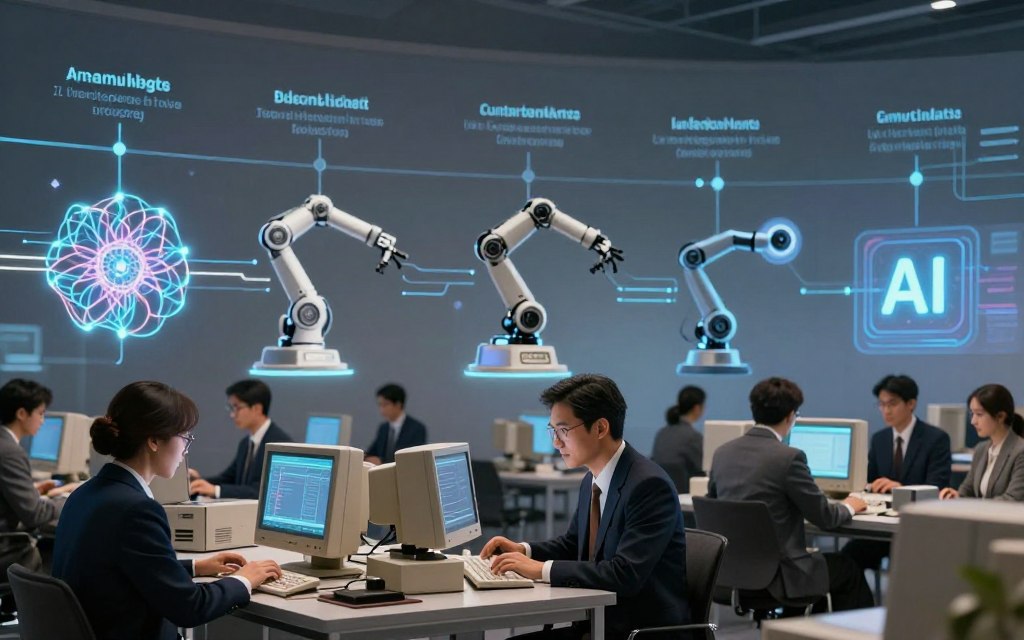
Today, organizations increasingly combine AI models with traditional IT systems. This shift treats AI as a core part of operational technology, not an isolated research project. MLOps, model monitoring, and data pipelines show AI’s place in daily IT work.
AI governance is also essential for responsible systems. It helps systems follow ethical and regulatory frameworks. This convergence improves efficiency, drives innovation across industries, and strengthens AI’s future role in IT.
Key Areas Where AI and IT Overlap
Artificial Intelligence (AI) and Information Technology (IT) now work closely together, creating synergies that improve business operations. Understanding these links helps organizations use technology effectively.
Machine Learning and Data Analytics
Machine learning is a part of AI that uses algorithms to learn from data and make predictions. IT-managed data platforms support this work through advanced analytics tools and databases. With these tools, businesses can:
- Identify trends and patterns in large datasets.
- Support forecasting and decision-making processes.
- Enhance customer experiences through personalized recommendations.
For instance, companies like Amazon use AI data analytics to tailor product suggestions, improving customer satisfaction and sales.
Cloud Computing and AI Integration
Cloud computing supplies the infrastructure that helps AI applications succeed. Cloud AI solutions provide scalable storage, specialized processors, and model-development environments. These capabilities help businesses:
- Access managed AI services without extensive on-premises resources.
- Deploy AI models rapidly and efficiently.
- Scale operations based on demand, optimizing costs.
Organizations like Google and Microsoft lead the way in providing cloud AI solutions that help businesses innovate and grow.
Cybersecurity Enhanced by AI
AI cybersecurity tools improve threat detection and response. Cybersecurity teams use AI to:
- Analyze user behavior for potential anomalies.
- Identify phishing attempts and fraudulent activities.
- Prioritize alerts based on risk assessment.
AI greatly strengthens security measures, but human oversight remains essential for addressing complex threats effectively.
Enterprise Software and Intelligent Automation
Enterprise software increasingly uses intelligent automation to streamline business processes. AI improves several functions:
- Customer service through chatbots and virtual assistants.
- Human resources by automating recruitment and onboarding.
- Finance for real-time analytics and reporting.
- Supply chain management to optimize inventory and logistics.
- Document processing and workflow management to reduce manual errors.
Adding intelligent automation improves efficiency and lets teams focus on strategic initiatives.
AI creates strong value when paired with reliable IT architecture, security controls, quality data, and effective business processes. Understanding these links helps organizations gain the full potential of AI and IT.
How AI Enhances Traditional IT Operations
Artificial Intelligence (AI) is revolutionizing how traditional IT operations function. AI for IT operations, also called AIOps, automates routine work and offers predictive insights. It streamlines processes, improves efficiency, and gives IT teams more time for strategic work.
Automating Routine IT Tasks
A major benefit of IT automation is its ability to handle routine IT tasks. For instance, AI can assist with:
- Password resets and assistance
- Ticket classification and prioritization
- Software deployment and updates
- Incident routing and management
- Routine diagnostics and monitoring
- Documentation and reporting
- Infrastructure provisioning
This automation reduces IT staff workloads while improving response times and accuracy when handling IT issues.
Predictive Maintenance and System Optimization
AI supports predictive IT maintenance by studying system metrics and user activity for early failure signs. With machine learning models, organizations can:
- Detect unusual behavior in hardware and applications
- Forecast network and cloud-service failures
- Optimize system performance through timely interventions
This proactive approach reduces downtime and improves system reliability. It helps keep IT services running without interruption.
AI-Driven Decision Support for IT Management
AI also supports IT managers’ decisions. It analyzes data from many sources to prioritize risks, use resources well, and forecast demand. Key benefits include:
- Enhanced visibility into system performance
- Improved event correlation and incident response
- Data-driven evaluations of service levels
However, AI has some limits. Inaccurate data, false positives, and poor integration can reduce its performance. Human oversight remains vital for high-impact decisions.
In conclusion, AI improves traditional IT operations and helps teams make informed decisions. For more insight into predictive technology and its future outcomes, read this resource.
AI as a Specialized Branch of Computer Science Within IT
AI is a specialized field within computer science and information technology. This link shows how computer science provides key ideas for both AI and IT.
Algorithms, programming languages, data structures, operating systems, databases, networks, and computational theory support both fields. These skills matter to anyone exploring AI computer science and IT.
Computer Science as the Foundation of Both AI and IT
Computer science provides the foundation for developing AI technologies. It teaches professionals to design and build AI systems.
This foundation supports IT specialization, so many IT specialists understand computer science principles. They can then manage AI-driven applications effectively.
Distinguishing AI Research from General IT Practice
AI research explores learning methods, reasoning, perception, language processing, and robotics. General IT practice focuses on reliable services, infrastructure management, and security.
This difference shows that AI research is specialized, while IT operations cover a broader range of work.
Academic and Industry Recognition of AI Within IT
Academic institutions and industry organizations may classify AI differently based on their goals. A computer science department may conduct AI research.
An IT department may deploy and manage AI systems. This division shows that AI is a specialized technical discipline within IT environments.
AI also extends into advanced research and engineering.
| Aspect | AI Research | General IT Practice |
|---|---|---|
| Focus Area | Innovative Technologies | Service Delivery |
| Core Skills | Algorithms, Robotics | Infrastructure Management |
| Application | Research & Development | Operational Support |
| Outcome | New AI Solutions | Reliable IT Services |
The Role of AI in US Tech Industry Growth and Innovation
The US AI industry is driving tech growth and innovation across the United States. Rapid advances in Artificial Intelligence are changing sectors, increasing investment, and creating new opportunities. Companies now use AI to improve efficiency and support AI innovation.
AI Investment Trends in the United States
AI investment has surged in recent years, with strong focus on robust infrastructure. This infrastructure includes data centers, cloud services, and semiconductor technologies. Major players like Amazon and Microsoft lead this effort by investing heavily in AI-driven cloud platforms that support businesses nationwide.
Major US Companies Leading AI and IT Integration
Several companies lead AI and IT integration, helping shape the future of US technology. Notable examples include:
- Alphabet: Innovating in AI research and applications.
- NVIDIA: Pioneering advancements in AI hardware and software.
- IBM: Providing AI solutions for enterprise software and consulting.
- OpenAI: Leading in AI model development and research.
Economic Impact of AI on the IT Sector
The AI economic impact on the IT sector is profound. AI creates software categories, raises demand for computing infrastructure, and improves productivity tools. It also increases demand for specialized talent and consulting services, creating tech jobs.
However, AI’s rise also brings challenges for companies. They must consider job design, competition, energy use, and regulatory frameworks. Technology adoption can be significant, but long-term benefits often outweigh these initial investments.
| Company | Focus Area | Investment Type |
|---|---|---|
| Amazon | Cloud AI Services | Infrastructure |
| Microsoft | AI Integration | Software Development |
| NVIDIA | AI Hardware | Chip Development |
| IBM | Enterprise AI Solutions | Consulting Services |
Career Pathways: AI Specialists in the IT Workforce
Technology is creating exciting AI IT careers where artificial intelligence meets information technology. As organizations adopt more AI solutions, demand for skilled professionals continues to grow. These AI jobs include roles such as a machine learning engineer and data engineer.
Emerging Job Roles at the AI-IT Intersection
- Machine Learning Engineer: Focuses on designing algorithms that enable machines to learn from data.
- Data Engineer: Responsible for building and maintaining data pipelines that support AI initiatives.
- AI Solutions Architect: Designs and implements AI solutions tailored to business needs.
- MLOps Engineer: Bridges the gap between machine learning and IT operations to streamline deployment.
- AI Product Manager: Oversees the development of AI products, ensuring they meet market demands.
- Cloud AI Specialist: Leverages cloud platforms to deploy AI solutions efficiently.
- Security Analyst: Focuses on safeguarding AI systems against potential threats.
- Data Scientist: Analyzes complex data sets to extract insights and inform decision-making.
- Responsible AI Specialist: Ensures ethical considerations are integrated into AI systems.
- Automation Engineer: Develops automated solutions to enhance operational efficiency.
Skills Required for AI-Focused IT Professionals
These roles require a mix of technical and professional skills.
- Technical Skills:
- Proficiency in Python and SQL
- Understanding of statistics and machine learning frameworks
- Experience with cloud platforms and APIs
- Knowledge of data pipelines and model deployment
- Familiarity with cybersecurity and identity management
- Software engineering skills for monitoring and maintenance
- Professional Skills:
- Effective communication and business analysis
- Strong documentation and project management abilities
- Competence in risk assessment and ethical judgment
Education and Certification Pathways in the US
People entering this field can choose several education paths in the United States.
- Degrees in computer science, information technology, data science, statistics, and engineering
- Boot camps and vendor training programs for hands-on experience
- Building a strong portfolio through internships and real-world projects
- Employer-based learning opportunities to gain practical insights
IT certifications from major cloud and technology providers can improve career prospects. However, practical experience and project work remain crucial in this competitive field. For more information on AI career paths, visit this resource.
Challenges and Considerations of AI Integration in IT
Integrating AI into IT systems creates challenges for organizations. Companies must manage ethical, technical, and workforce issues while building successful AI programs. Understanding these issues supports responsible AI integration.
Ethical and Regulatory Concerns
One major challenge is addressing ethical and regulatory concerns. AI systems must respect privacy, gain consent, and avoid biased decisions. Stakeholders also need clear explanations, especially for sensitive decisions.
Intellectual property and security issues also require clear accountability. As AI regulation evolves, businesses must track rules, meet requirements, and reduce risks from automated decisions.
Technical and Infrastructure Challenges
Technical problems can slow AI integration into existing IT systems. Poor data, legacy systems, and model hallucinations create major hurdles. Cybersecurity threats against AI models, limited computing capacity, and energy consumption add pressure.
Vendor dependence and complex integration can cause model drift. Organizations need strong monitoring and testing to control it. Addressing these AI integration challenges helps keep AI systems reliable and effective.
Workforce Adaptation and Skill Gaps
As AI evolves, the workforce supporting it must evolve too. Organizations must reskill IT teams to close the IT skills gap linked to new technologies. Cross-functional governance can improve teamwork and oversight for AI projects.
Clear human escalation processes help ensure proper review of automated decisions. Successful integration needs ongoing data governance, access controls, performance monitoring, and incident response strategies. Responsible AI adoption also involves IT architecture, management, security, and organizational change.
Conclusion
The relationship between artificial intelligence and information technology is important and continues to change. AI is not separate; it is a key part of the wider IT landscape. Organizations use AI-enabled IT solutions to improve cloud computing, data analytics, and cybersecurity.
Information technology provides the infrastructure and operational frameworks that organizations need. AI provides methods for learning, prediction, and automation. Together, they drive innovation and efficiency across many sectors.
As we look to the future of AI and IT, demand for skilled information technology careers will keep growing. Companies will seek experts who can integrate AI technologies into existing systems. Successful AI implementation will require reliable infrastructure, strong cybersecurity, and responsible governance.
The future of AI-enabled IT will depend on how organizations match technology advances with business and public needs. This alignment will ensure that artificial intelligence and technology create solutions that are effective, ethical, and sustainable.